
Checking Pulaski County Criminal History
No single search returns every part of a Pulaski County criminal history. Begin with the Judici court search for a local docket, then compare that entry with the Circuit Clerk's file. Use the sheriff or detention center for recent custody and booking material. The Illinois State Police repository is a separate statewide layer, and the Illinois Department of Corrections covers people committed to state custody. Each source answers a different question.
Gather the person's full legal name, spelling variants, an approximate filing or arrest year, and a case or booking number if known. A date of birth can help distinguish common names, but sensitive identifiers should not be sent unless an official form requires them. Follow these steps in order:
- Select Pulaski County in Judici and search by exact case number or party name.
- Compare the filing date, case type, charge, and events before deciding that a name match is correct.
- Call the Circuit Clerk when a docket is unclear, an image is absent, or a certified disposition is needed.
- Ask the arresting agency or detention center for its report or booking file because the court does not keep those records.
- Use CHIRP for reported Illinois convictions, then use IDOC or federal tools only when the custody or case moved beyond the county.
When a result is absent, change the source before changing the conclusion. Judici may lack an old image while the clerk still holds the paper or scanned file. The detention center may hold a booking sheet even though no public roster exists. ISP may omit a non-conviction from the public UCIA response, and IDOC will not list a person held only in the county jail. Ask the custodian what years and file types its search covers. For a final outcome, request the certified disposition from the Pulaski County Circuit Clerk rather than relying on a screen capture or an early docket event.
Pulaski County's Five Record Keepers
Pulaski County concentrates many criminal-record offices at 500 Illinois Avenue in Mound City. The Circuit Clerk keeps court cases. The State's Attorney handles charging. The public defender contact, probation office, sheriff, and detention functions also route through the courthouse. This makes the address useful, but it does not merge their files. A court order, arrest report, booking sheet, and probation note remain distinct records under separate custodians.
The official Pulaski County government site shows this local routing. Its captured navigation provides a practical view of the county office structure.
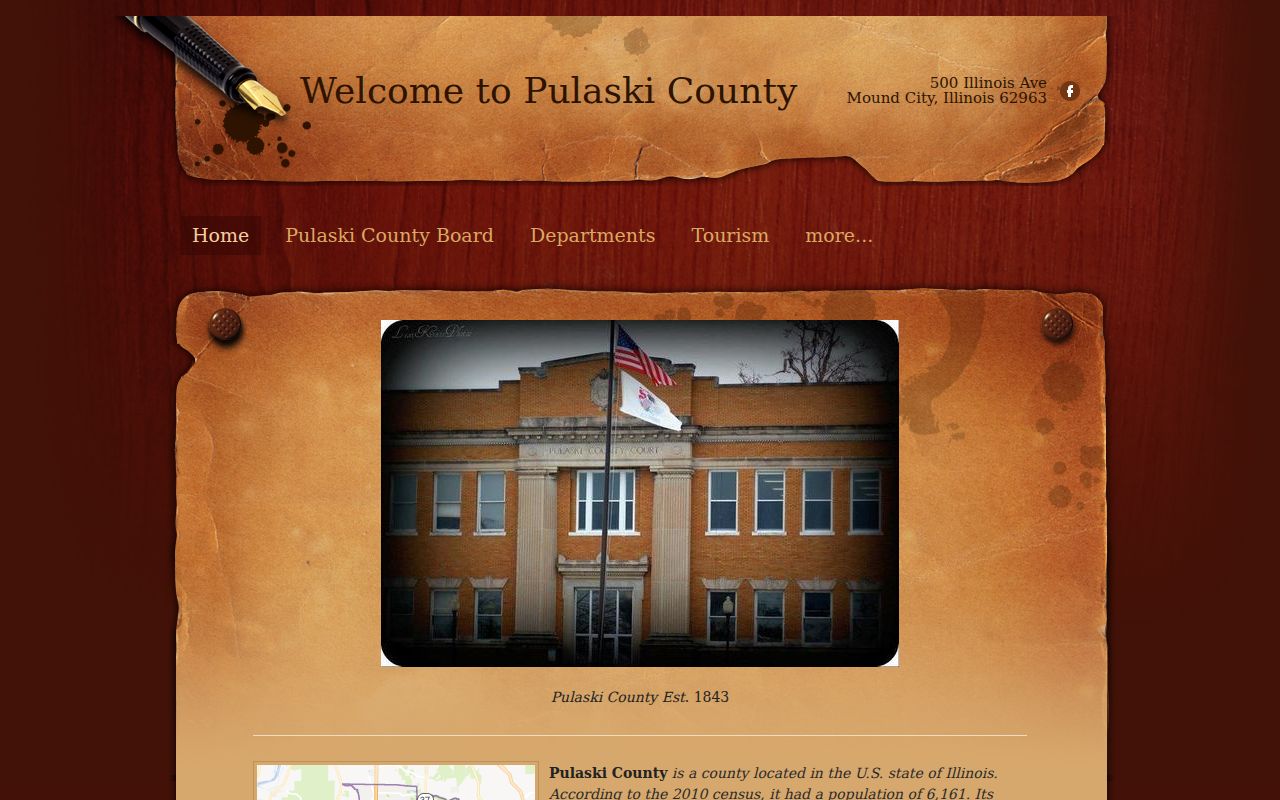
Use the department directory to find the office that created the record instead of sending one broad request to every courthouse office.
Circuit Clerk
500 Illinois Ave., Mound City, IL 62963
618-748-9300
Weekdays, 8 a.m. to noon and 1 to 4 p.m.
Sheriff and Detention Center
500 Illinois Ave., Mound City, IL 62963
Request incident, arrest, jail, or booking records held by the county.
Pulaski Probation
Courthouse, Room 1
618-748-9643
Public case orders may show a term; private supervision notes do not.
The counter schedule affects in-person searches. The Circuit Clerk publishes weekday hours from 8 a.m. to noon and 1 to 4 p.m., with a noon closure. Call 618-748-9300 before a midday trip. The clerk also serves as the court disability coordinator and publishes an accommodation contact through the Illinois Courts directory. Parking, recording-device, bag, and phone rules were not reliably published, so ask before bringing equipment. The clerk cannot move a court date. A citation marked as requiring an appearance still calls for the required appearance or contact with the State's Attorney at 618-748-9134.
Illinois Official Background Checks
The Illinois State Police Bureau of Identification maintains the state repository. Its Criminal History Information Response Process, known as CHIRP, provides name-based or fingerprint-based Illinois conviction information to eligible users who complete the access agreement. Public UCIA dissemination is conviction-only. It is not a complete list of arrests, dismissed cases, or every document at the Pulaski County courthouse.
The ISP criminal-history page explains the repository and UCIA choices.
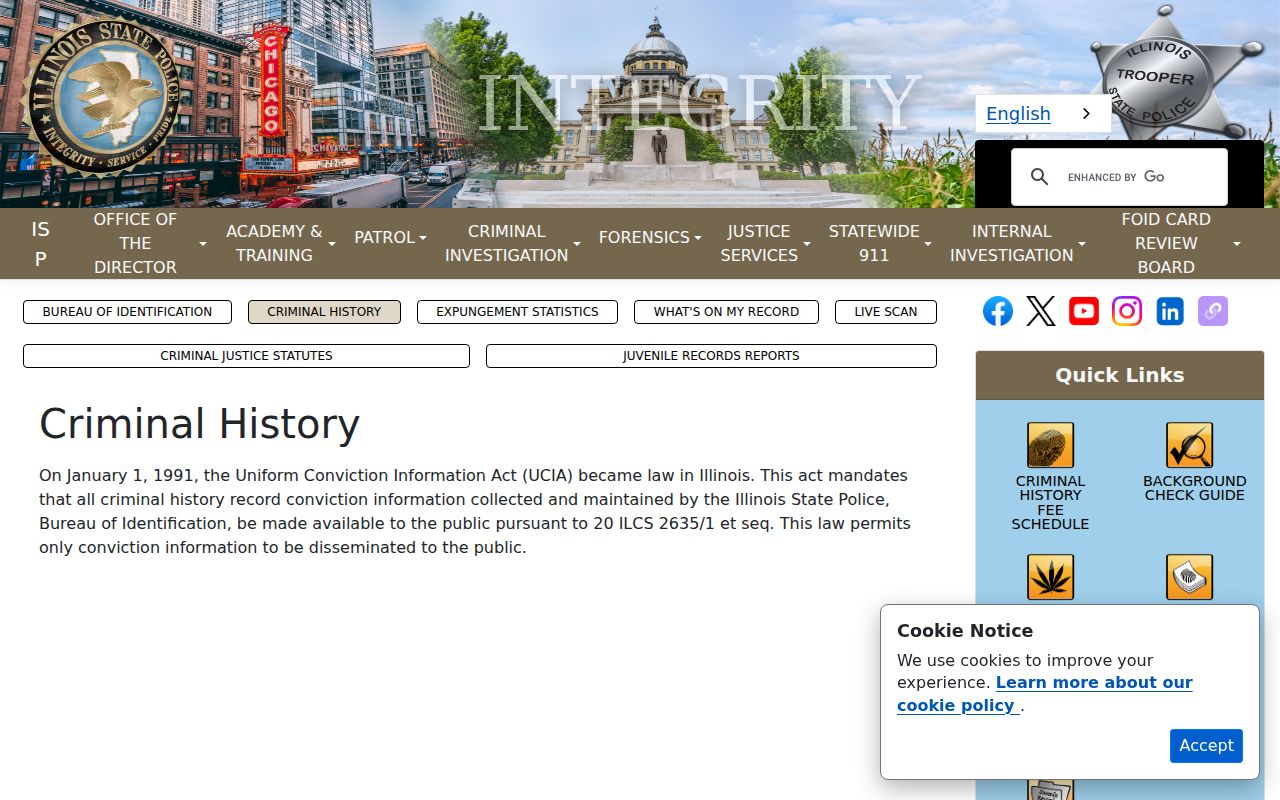
For a person's own identity-matched state record, follow ISP's review and fingerprint instructions. Illinois licenses private live-scan vendors, and no fixed vendor in Pulaski County was confirmed.
A name search and a fingerprint check also have different error risks. A name response can confuse people who share a name and birth details. Fingerprints tie the request to one identity, but the user must follow the correct statutory program, purpose code, capture method, and transmission route. Vendor charges can sit on top of state or federal fees. Verify the current ISP schedule when ordering. If the state record has the wrong outcome, obtain a certified Pulaski County disposition and use the Bureau of Identification challenge process. Updating the local docket alone may not repair the repository entry.
Pulaski Court Search vs CHIRP
Judici and CHIRP should not be treated as duplicate Pulaski County criminal record searches. Judici centers on a case filed in the First Judicial Circuit. It can show the case number, docket events, charges, settings, and outcome entered by the clerk. CHIRP searches conviction information reported to the state repository across Illinois. A new Pulaski County case may appear on Judici before the state repository receives a final disposition. A dismissed case may remain visible at the clerk while the public UCIA response omits it.
The official CHIRP portal requires authenticated access.
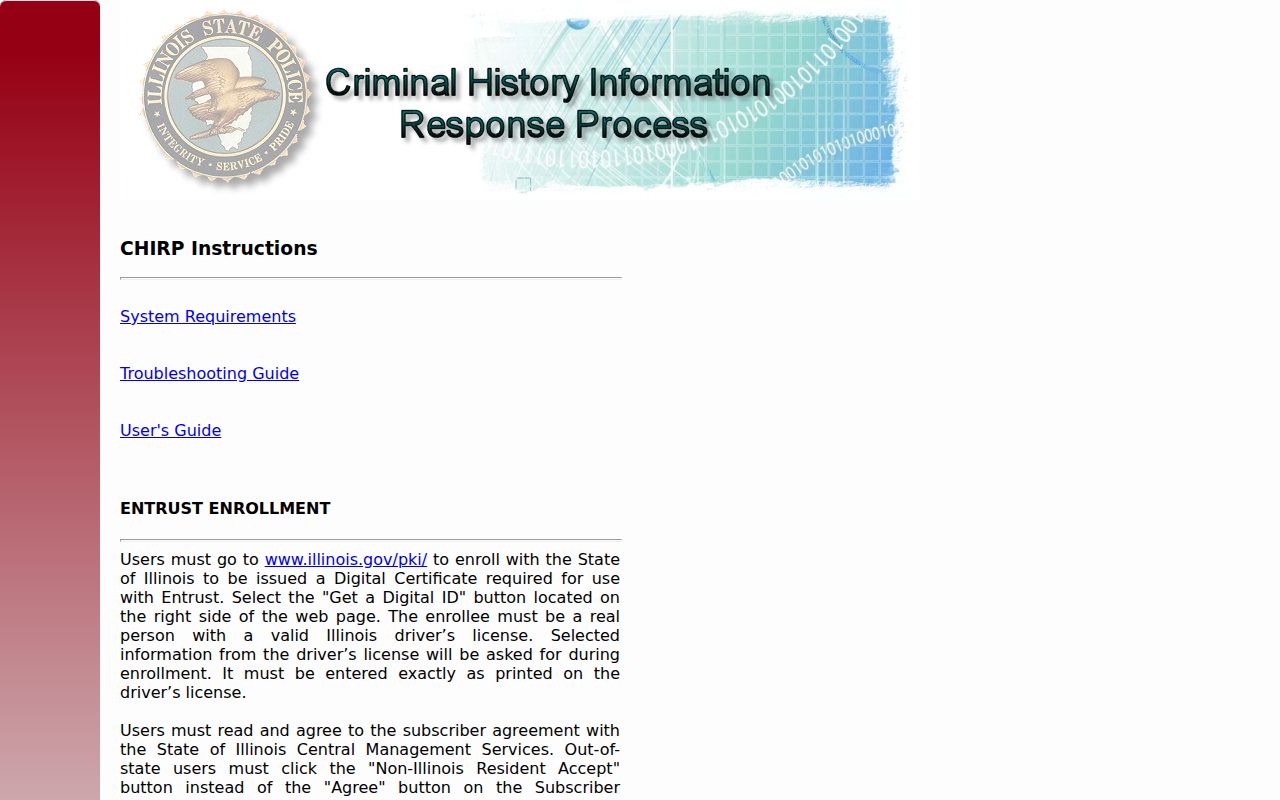
CHIRP users must return to the portal for a completed response because the system does not email the result.
| Channel | Best use | Main limit |
|---|---|---|
| Judici and clerk | Read a Pulaski County case and disposition | Not a statewide rap sheet |
| CHIRP or paper UCIA | Search reported Illinois convictions | Public response omits non-convictions |
| Fingerprint review | Review one's own identity-matched state record | Vendor, purpose, and fees vary |
Judici searches can begin with a case number or a name. Select Pulaski County so the result is not confused with another jurisdiction. A case number is the strongest key. Name searches should be narrowed with the first name, filing year, case category, charge, and event history. Criminal, traffic, and ordinance entries may be separated. The public docket can show dates and text without offering every underlying document. Record the exact case number before calling the clerk, then ask whether a pleading, order, or certified disposition can be inspected, mailed, emailed, or copied at the counter.
The CHIRP name workflow asks for legal name and core identity details. Middle initials should follow the portal's format, and the official user guide warns against adding a period after an initial. Date of birth and coded identity fields improve matching. An Illinois resident's Digital ID enrollment uses driver-license information entered as printed, while an out-of-state user follows the nonresident acceptance route. Responses are retrieved after sign-in, not mailed or emailed. These steps make CHIRP less direct than a free Pulaski County docket search, but its statewide conviction scope can find a reported outcome outside the First Judicial Circuit.
Criminal Record Types
A Pulaski County criminal history is assembled from records made at different steps. Police create the incident and arrest report. Jail staff create the booking file after intake. The State's Attorney files a complaint, information, or other charge in Circuit Court, and the clerk keeps the resulting docket and orders. ISP links reported arrest cycles and dispositions in its repository. These files can differ without any one being false because charges change and reports arrive at different times.
- Incident and arrest reports: allegations, witnesses, location, probable cause, and officer action held by the arresting agency.
- Booking records: jail intake, identifiers, holding charges, bond status, and release information.
- Court case files: filed counts, events, orders, pleas, judgment, sentence, and financial entries.
- Repository records: fingerprint-supported cycles and reported outcomes maintained by ISP.
- Custody and supervision records: county jail, IDOC, probation, parole or mandatory supervised release information.
Warrants and registry listings add two more record types. A judge issues a warrant, while law enforcement and court systems track service and status. An unserved or sealed warrant may not appear in a public search. Verify a possible Pulaski County warrant with the issuing court or sheriff and do not try to resolve it through an unofficial list. The Illinois State Police Sex Offender Registry publishes only the information required by registry law. It is offense-specific and does not stand in for a complete criminal history. Probation orders appear in court, but private supervision notes, treatment data, and tests are not an open profile.
Police and crash reports also remain with their creators. Pulaski County has no unified pool for reports made by the sheriff, a city department, an ISP trooper, conservation police, or another agency. Start with the agency named on the citation or report. For a crash, use the official Illinois crash-report instructions and provide the date, location, party name, and report number when known. Requests for 911 audio, dispatch records, or body-camera video should identify a tight time window and involved unit. Retention limits and the work needed to redact video make a prompt, precise request especially useful.
Pulaski Jail Records Without a Roster
No official public Pulaski County inmate roster was located in the research. An empty web search therefore does not prove that a person was never arrested or is not now held. Call the Sheriff or detention center through the county courthouse, ask what current custody and bond information can be released, or submit a narrow written FOIA request. Name the person, date range, type of record, and preferred format. If a city police department made the arrest, request its incident report from that city even if the county jail performed the booking.
Pulaski County booking data follows a chain: Arresting agency → detention intake → State's Attorney charging choice → Circuit Clerk case → ISP disposition reporting. A break or delay at one point can make the sources appear inconsistent.
Note: The county jail and IDOC serve different custody stages, so both may need to be checked after a sentence or transfer.
A written jail request should identify the subject name, the type of material, the likely date and time, and the arresting agency if known. Include contact and delivery details and say whether an electronic copy, paper copy, inspection, or certification is wanted. A case number, booking number, or incident location can cut down the search. Ask for an estimate before costs pass a stated cap. The sheriff cannot be assumed to have the full incident narrative for an arrest made by Mounds, Mound City, Karnak, Illinois State Police, or another department. The creator remains the best source for its own report.
Inside a Pulaski County Criminal Record
The fields depend on the custodian. An ISP record starts with identity and fingerprint-supported arrest cycles. A Pulaski County court file starts with a case number and counts. A booking record focuses on custody. Read the source label before interpreting any status, and never turn an initial charge into a final finding.
| Name and Identifiers | Legal name, aliases, birth date, sex, race, SID, and sometimes an FBI number. |
|---|---|
| Arrest and Booking Data | Arrest date, agency, booking identifier, intake details, holding charges, bond, and release. |
| Charges and Statutes | Filed count, offense wording, statutory citation, and class when entered. |
| Disposition | Conviction, acquittal, dismissal, supervision, nolle prosequi, or another final outcome. |
| Sentence | Custody, probation, fines, restitution, or other terms shown in the judgment. |
| Custody or Supervision | County hold, IDOC status, probation, parole, or mandatory supervised release when public. |
A court disposition must be read count by count. One charge may be dismissed while another ends in a conviction or supervision. “Nolle prosequi” means the prosecutor stopped pursuing that count; it does not say that every record was erased. An acquittal is a not-guilty trial result. A dismissal ends a charge without a conviction. Illinois supervision may avoid a judgment of conviction after successful completion, but the case does not vanish merely because the term ended. Compare the final order, docket text, and repository response. When they disagree, the certified clerk record is the key document for a correction request.
Pulaski County Jail, IDOC, or BOP
Custody searches split into three levels. The Pulaski County detention center handles local pretrial and short-term custody, but has no confirmed public roster. The IDOC Individual in Custody Search covers people committed to Illinois corrections and may show parole or mandatory supervised release information.
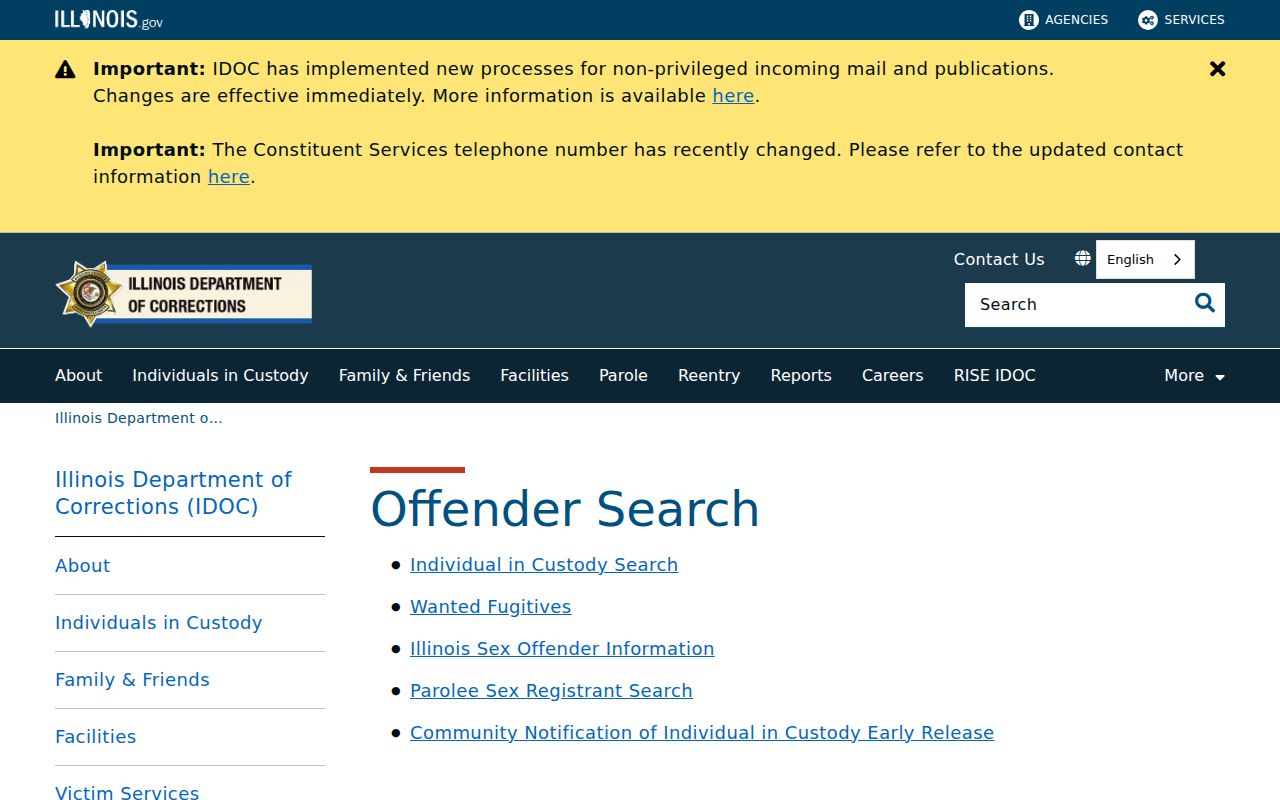
A missing IDOC result says little about a person held only in Pulaski County. Federal custody uses the Bureau of Prisons locator.
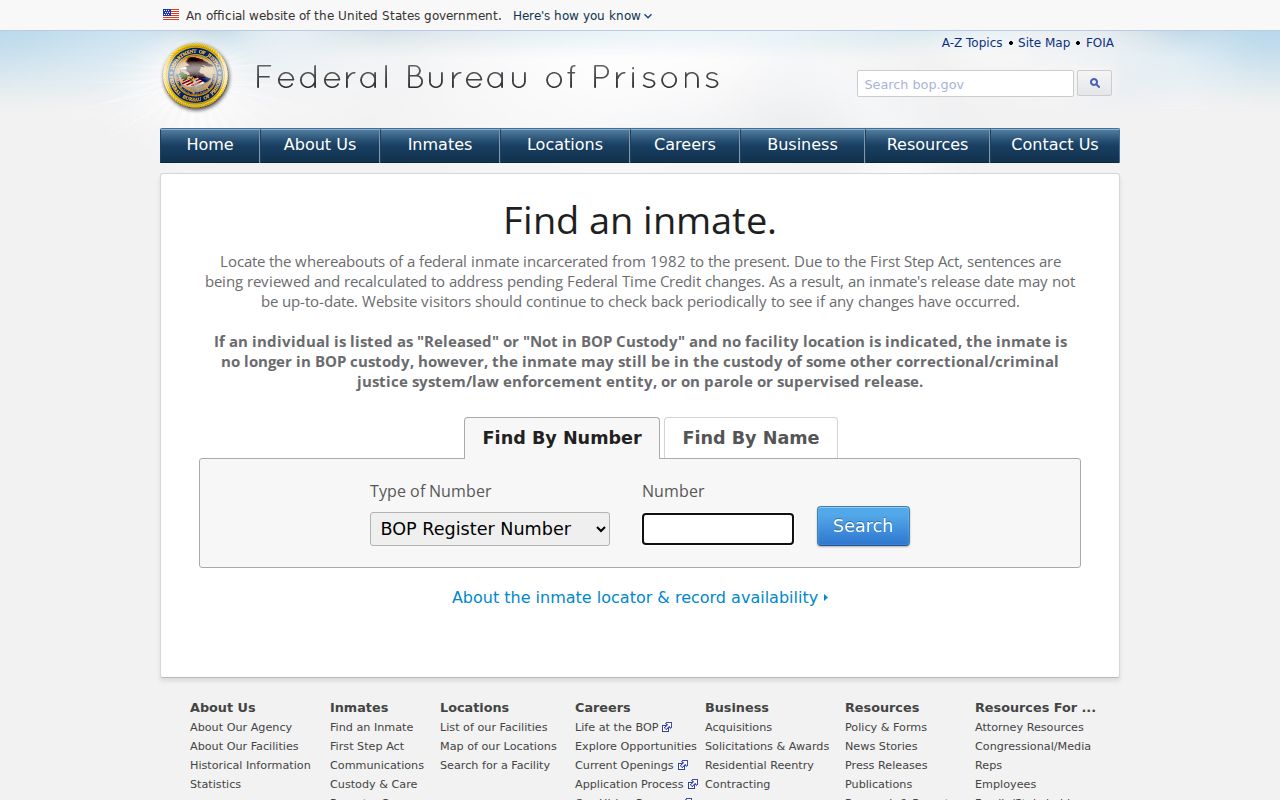
The BOP image marks the federal layer, which should be used only when a federal sentence or transfer is plausible.
Probation and parole require the same care. Pulaski County Probation, at courthouse Room 1, handles local court supervision and can be reached at 618-748-9643. The public docket may show a probation sentence or a petition to revoke, but the office's case notes are not a public court file. IDOC supervises parole and mandatory supervised release, while the Illinois Prisoner Review Board handles release or revocation decisions where applicable. Victim notification can supplement a custody search, but it does not create a full supervision history. Interstate moves also run through formal compact procedures, not a simple local address change.
Public Access Laws in Illinois
Illinois law starts from public access but preserves limits for active investigations, juveniles, sealed matters, victim safety, medical information, private identifiers, and court-controlled files. A public record may be redacted. An agency should release nonexempt parts that can be separated from withheld material.
Key statutes:
5 ILCS 140, Illinois FOIA presumes public-body records open unless an exemption applies.
5 ILCS 140/6 sets copy-fee rules and makes the first 50 ordinary black-and-white pages free.
20 ILCS 2635, UCIA makes ISP conviction information public without opening all non-conviction history.
20 ILCS 2630/5.2 governs expungement and sealing procedure and eligibility.
FOIA governs records held by a public body, not every document that mentions a person. Court files also remain subject to court rules and sealing orders. The public body bears the burden of supporting a FOIA exemption, but release can be delayed or narrowed where an active investigation, confidential source, fair-trial interest, victim safety, juvenile file, medical fact, or private identifier is at stake. Ask for the releasable parts if only some content is exempt. Online access is a convenience rather than the legal boundary of the file. A missing web result may reflect sealing, age, data entry, or platform limits.
Illinois felony and misdemeanor labels can help interpret a Pulaski County docket, but the filed class is not a sentence prediction. Counts can be amended or reduced, and enhancements depend on the live statute and facts. Illinois ordinary ranges run from Class C misdemeanors through Class A misdemeanors, Class 4 through Class X felonies, and offense-specific first-degree murder rules. Fine-only ordinance matters may begin with local enforcement, yet no separate public municipal court database was confirmed for Mounds, Mound City, or Karnak. Verify the filing venue with the issuing agency and search the circuit docket before assuming the matter stayed at a city level.
Pulaski County FOIA Costs
The detention center's written FOIA route is the fallback for booking and jail records that do not appear online. Label the request “FOIA Request,” keep proof of delivery, and describe the record with a narrow date range. State whether electronic inspection, paper copies, or certification is needed. Illinois generally gives a public body five business days for a noncommercial response, with a permitted five-business-day extension when written reasons are supplied.
| Item | Illinois rule or local status |
|---|---|
| First 50 black-and-white pages | Free for letter or legal size |
| Extra black-and-white pages | Up to 15 cents per page |
| Color, oversize, or media | Actual reproduction cost |
| Local jail report or photo | No current county fee schedule found; ask for an estimate |
A denial must identify the exemption and review rights. The Illinois Attorney General's Public Access Counselor or circuit court may review a disputed denial.
Electronic delivery often keeps copy costs low, but color pages, oversize material, storage media, and certified copies can follow different rules. Ordinary noncommercial requests generally are not billed for staff search or review time, while commercial or voluminous requests have special provisions. Pulaski County did not publish a current jail report or booking-photo fee menu in the source set. Do not assume a price. Ask the office to state the amount and legal basis before copies are made. Keep the original request, delivery proof, extension letter, invoice, and response together in case review becomes necessary.
Sealed, Expunged, and Restricted Records
Illinois uses both expungement and sealing, but they do not mean the same thing. Expungement generally destroys or returns a qualifying record as the statute directs. Sealing hides a qualifying record from ordinary public access while preserving access for authorized purposes. Some specified records may be sealed automatically. Juvenile matters and protected identifiers also follow special access rules.
The Illinois Courts approved forms page provides statewide filing materials.
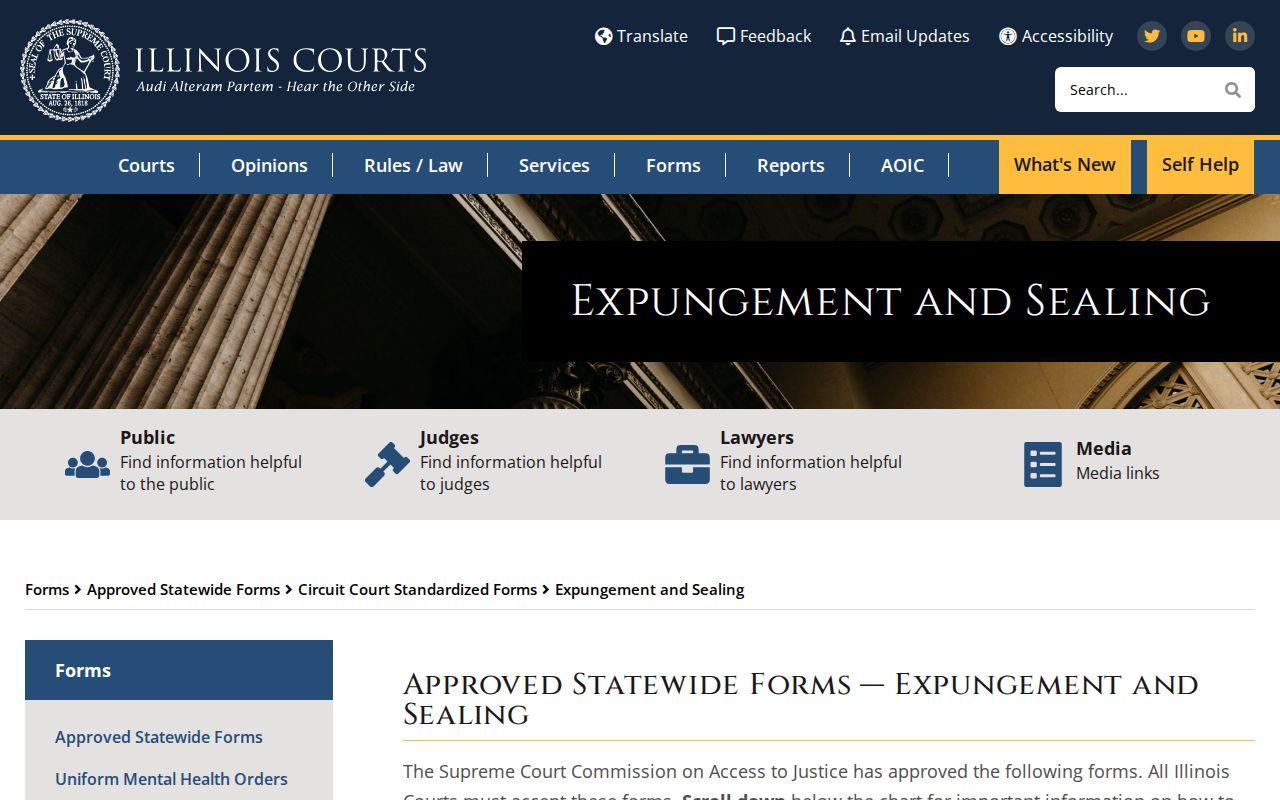
File in the circuit where the case belongs and follow the current eligibility instructions. A dismissal is not automatically erased, and a court order must reach the clerk, arresting agency, and ISP.
Eligibility depends on the case, charge, outcome, waiting rules, and later history. The State's Attorney and other agencies may receive notice and may object as the statute permits. Filing forms are not a promise that relief will be granted. After an order, check each public source at a reasonable interval. If Judici changes but the ISP response does not, contact the repository with the order and certified disposition under its instructions. If an arresting agency still displays a record that should be restricted, send that agency the order through its designated process rather than assuming the clerk controls every copy.
Federal Records Beyond Pulaski County
Federal records require separate tools. PACER is the federal court-record system, including matters filed in the Southern District of Illinois.
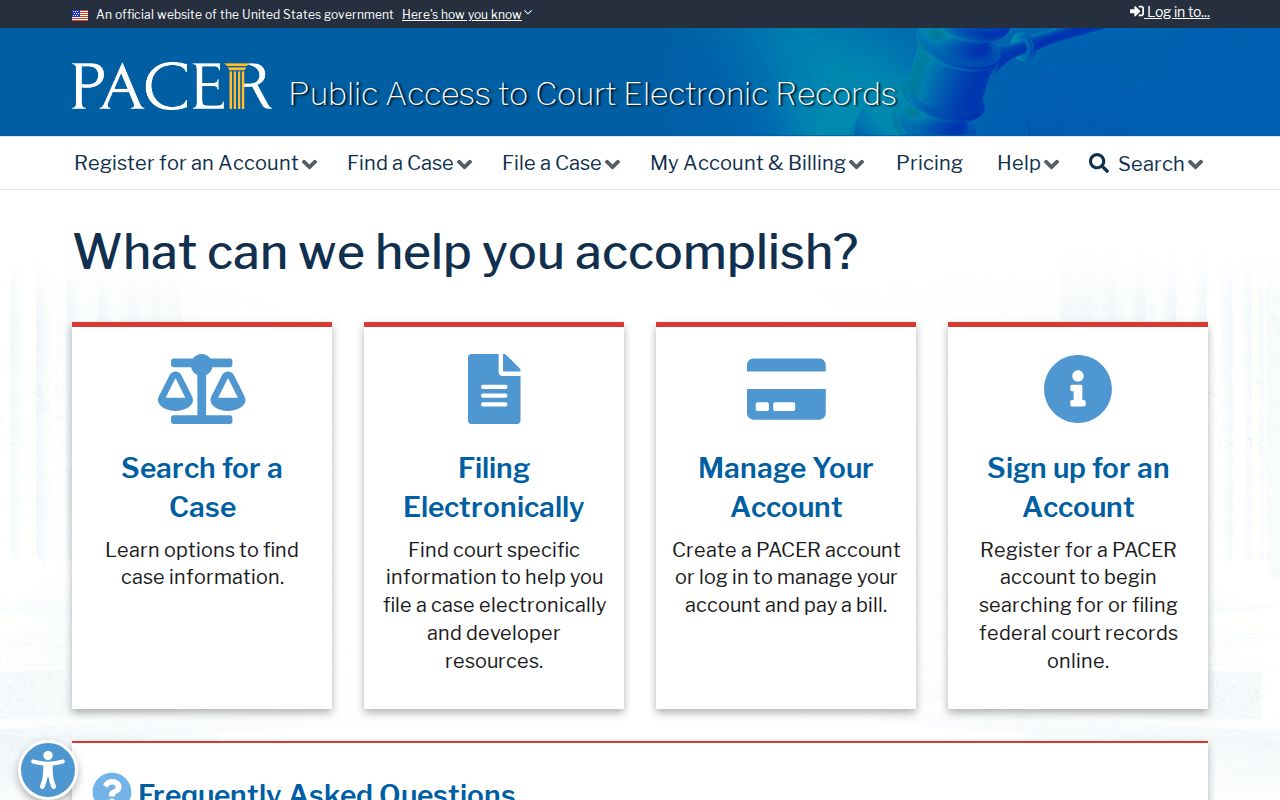
PACER registration and document charges differ from a free Judici docket search. For a person's own fingerprint-supported national file, the FBI offers its Identity History Summary through the electronic department order portal.
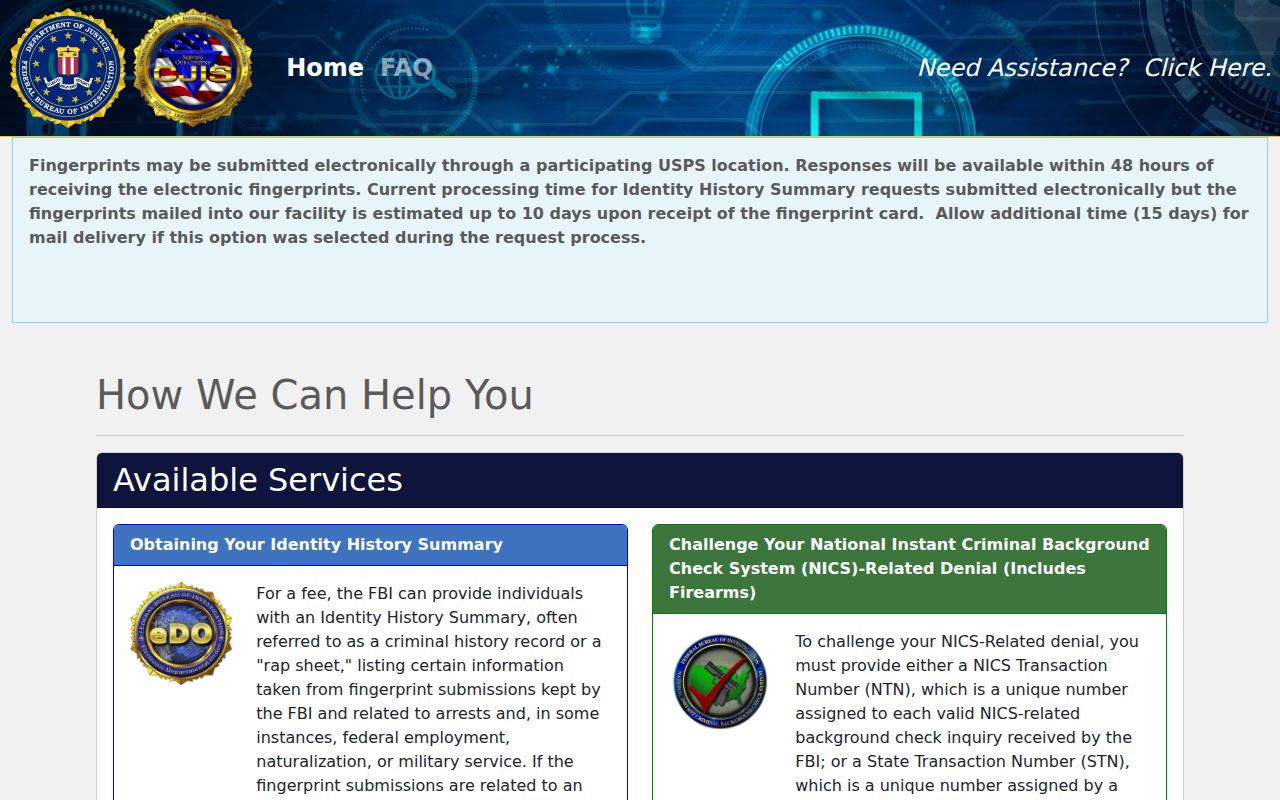
The FBI fee is $18, and fingerprint capture or channeler service can add cost. That summary does not replace the Pulaski County court file.
The Southern District of Illinois is the relevant federal trial-court region, but a person-name search at the Pulaski County clerk will not return its cases. PACER can show federal dockets and documents after registration. The BOP locator covers federal custody, not county jail status. The FBI Identity History Summary is subject-only and may contain fingerprint-supported submissions sent to the FBI. It is best used to review one's own file. A participating post office or mailed fingerprint card may be used as directed, and approved channelers can add service limits and fees. Match the tool to the federal question rather than searching every system by default.
Pulaski County Criminal Records by City
Mounds, Mound City, and Karnak are the three largest incorporated places identified in the Pulaski County research. No reliable city police records portal or separate municipal court database was found for any of them. Begin with the agency named on the incident or citation, then use the Pulaski County Circuit Clerk and sheriff channels when the record moved into county court or detention.
Mounds Criminal Records
Largest incorporated place in the ranked set; confirm the report creator before filing a request.
Mound City Criminal Records
County seat and location of the courthouse, clerk, sheriff, detention center, and probation office.
Karnak Criminal Records
Village records may begin locally, while filed cases and county bookings route to Mound City.
Pulaski County's Older Record Trail
Pulaski County was established in 1843, and older proceedings may no longer sit with current counter files. The County Clerk and Circuit Clerk are sensible first contacts when a search is historical. If a record was transferred, the Illinois Regional Archives Depository at Southern Illinois University's Morris Library in Carbondale is the archival fallback. IRAD helps with genealogy and old county government records, not a current court date or custody status.
The county's small population and one-courthouse structure also shape the search. Separate town and agency files can feed one county case, while old material may move to an archive. Name the approximate year, person, record type, and court when asking staff to trace it.
- Docket
- The dated list of events in a court case.
- Disposition
- The outcome of a charge or case.
- Supervision
- An Illinois result that may avoid a judgment of conviction if completed.
- Sealing
- A restriction that hides a record from ordinary public access without destroying it.
Current names and office holders can change, while the record route is more stable. The source set identifies Circuit Clerk Stephanie L. Crain, Presiding Judge William J. Thurston, State's Attorney Lisa Casper, Sheriff Randy Kern, and probation supervisor Richard Goines as of the research date. Confirm a person before directing mail to an individual. For older Pulaski County records, call the County Clerk or Circuit Clerk first, then ask whether IRAD received the series. For current case status, return to the Circuit Clerk and Judici rather than treating an archive catalog as a live docket.
County statistics need the same source care as person records. The Census Bureau estimated 4,879 Pulaski County residents in 2024 and 4,820 in 2025, after a 2020 count of 5,193. In a small population, a handful of events can swing a rate sharply. Crime data should name the reporting agency, year, measure, and completeness. An arrest count is not the same as offenses reported to police, and a Mounds agency total is not a countywide total. The research did not find a stable official table with clear enough agency completeness for a current county crime claim, so no unsupported crime rate is presented.