
Checking Criminal History in Mound City
Mound City's physical concentration of offices can make a search feel simple, but the right counter depends on the document. Police hold the city incident narrative. Jail staff hold booking and custody material. The Circuit Clerk holds the docket, filings, orders, and disposition. ISP holds a separate statewide repository record.
Follow five steps for a full self-review:
- Confirm whether Mound City police, the Sheriff, or ISP created the incident report.
- Ask that agency's FOIA officer for the specific report or media.
- Use the detention center's written FOIA route for booking information when needed.
- Search Pulaski County in Judici and request certified court copies from the Circuit Clerk.
- Compare the local disposition with ISP CHIRP or the proper ISP personal-review response.
Record the identifiers each office gives you. A booking number and court case number are not interchangeable.
Mound City Criminal Records Hub
The courthouse complex at 500 Illinois Avenue is Mound City's key records landmark. County research places the Circuit Clerk, court, State's Attorney, public-defense contact, probation, Sheriff, and detention functions at this shared hub. That makes travel easier, but it does not merge their records or their authority to release them.
A requester seeking the result of a prosecution should see the clerk. Someone seeking the officer's account should identify the responding law-enforcement agency. Jail staff answer for booking and custody data retained by the detention center. Prosecutor work product is not a substitute for the public court file. Statewide conviction information must come from ISP. Naming the exact record at the outset prevents a trip between offices.
Mound City Police Department Records
No official Mound City police report portal, arrest blotter, mobile app, or stand-alone municipal case database was verified. Contact city government and confirm the current police records custodian, FOIA officer, submission address, hours, and accepted request method. Do not send a date of birth or other private identifier until the receiving office is confirmed.
A useful city request states the incident number, date, time, place, involved party, and requested item. Specify incident report, arrest report, crash record, dispatch audio, or video. Add the desired format, whether a certified copy is needed, and whether staff should send a cost estimate first. If a deputy or trooper handled the call, redirect the request to that agency because the city cannot release a report it did not create.
Mound City Records Have Separate Custodians
City police and the Pulaski County Sheriff are separate public bodies even when their staff work in the same small county seat. The officer's badge and agency on a citation, report number, or court docket can identify the proper source. Location alone does not establish ownership.
This distinction is most important for audio and video, which can have different retention and exemption questions than a paper report. Ask early and narrowly. For court outcomes, the clerk's certified disposition carries more weight than an initial police charge. For current custody, contact the jail. For a statewide public conviction response, use ISP. Each response answers one part of the Mound City criminal record trail.
Mound City Arrests and Bookings
A custodial arrest in Mound City generally enters the Pulaski County Detention Center at the courthouse complex. Jail intake creates its own record with booking time, identifying details, arresting agency, initial charges, and release or detention data. The research found no official live inmate roster. Use a phone inquiry for current public custody facts or follow the detention center's FOIA instructions for retained booking material.
Initial holding charges can change once the State's Attorney reviews the matter. The court docket is therefore the better source for filed counts and final disposition. A booking photograph or booking entry only proves intake. It does not prove guilt. The county-wide arrest lookup explanation covers the full jail fallback chain without turning Mound City's page into a duplicate county guide.
Mound City Clerk Counter Schedule
The Pulaski Circuit Clerk's published weekday counter schedule is 8 a.m. to noon and 1 p.m. to 4 p.m. The noon closure matters when traveling for copies. Call 618-748-9300 before a long trip to confirm current operations, the file's availability, copy charges, and whether certification can be completed that day.
The clerk can provide docket and copy information but cannot change a court date merely because a visitor asks. A citation marked appearance required must be treated as required unless the court says otherwise. Distinguish the clerk's administrative record role from legal advice and from the judge's control of scheduling and orders.
Municipal Court Records in Mound City
No separate Mound City municipal portal was confirmed. The citation or charging paper should name the court. Pulaski criminal, traffic, and ordinance cases filed in the Circuit Court can be searched through Judici, with the clerk as the source for missing docket details and certified copies.
| Court Name | Circuit Court of the First Judicial Circuit, Pulaski County |
|---|---|
| Case Types Heard | Felony, misdemeanor, traffic, and ordinance cases filed in circuit court |
| Case Lookup Channel | Judici, Circuit Clerk phone, or the clerk counter at 500 Illinois Avenue |
| What the Docket Shows | Case number, filed counts, events, dates, judge, status, financial entries, and disposition when public |
| Copies & Fees | Current rates and certification should be confirmed with the clerk |
Sealed, expunged, juvenile, and protected data may not appear in the public view.
Mound City Judici and Copy Route
Choose Pulaski County on Judici and use the case number when available. A name search should be checked against filing date, charge, case type, and event history. A free docket can establish the public procedural trail, but document images or older records may not be available online.
The Illinois Criminal Identification Act supplies important record context.
The statute helps explain why some records can be sealed or withheld from ordinary public access.
When an official outcome is needed, ask Stephanie Crain's Circuit Clerk office for a certified disposition. A docket screenshot is not the same product.
Where Mound City Records Go
A Mound City police report can be followed by county booking, prosecutor review, and a Circuit Court case. Fingerprints and qualifying arrest data may be transmitted to ISP's Bureau of Identification, while the court later reports a qualifying disposition. Delays or failed matches can leave the systems out of sync.
Record flow: Mound City PD › Pulaski County Courts › Illinois State Police Bureau of Identification
For self-review, compare the police or booking identifier, court case number, and ISP arrest cycle. If the statewide record lacks the final court result, obtain the certified disposition and follow ISP's challenge process. Correcting a public docket display alone does not guarantee that the repository entry has changed.
Mound City Pretrial Record Changes
Illinois pretrial reform changed the terms readers see on current dockets. Release conditions and detention hearings should not be read through the old assumption that every case turns on conventional cash bail. Pulaski County receives statewide pretrial services, and the local docket records what the judge ordered.
The Illinois Courts pretrial implementation source explains the statewide transition.
The source helps a Mound City reader interpret newer release and detention entries without treating them as a case outcome.
Pretrial services records and the public court docket are not identical. Use the signed order and clerk file for the court's official action.
Older Mound City Court Records
Mound City's county-seat history gives it a longer paper record trail than an online search can show. When Judici does not reach an older case, ask the Circuit Clerk about archived holdings and transfer status. The Illinois Regional Archives Depository, or IRAD, is the research-backed fallback for eligible historic Pulaski County material.
Give an approximate year, full name, case type, and any known number. Historical research often requires a broader date window because spelling, indexing, and case numbering changed. Keep genealogy and archival inquiry distinct from a current criminal-history check. An old index entry may require a separate request for the actual file, and access rules still apply to protected records.
Mound City researchers should distinguish an index from the record it describes. An index may establish that a case or volume exists without showing the pleadings, judgment, or sentence. Ask which repository holds the original, whether the file can be copied, and whether clerk certification is available. If the purpose is correcting a current Illinois repository entry, an archival index alone may not meet ISP requirements. The useful item is the official disposition tied to the same defendant and charge cycle. Preserve the source name, volume or case reference, and response date so the historic search can be repeated.
Mound City FOIA Copy Costs
Illinois FOIA sets rules for ordinary public-body copying fees, but the exact format and volume matter. Electronic delivery may reduce paper costs. Certification, court copies, and special media can follow other schedules, so request an estimate before authorizing a large job.
The FOIA copying provision states the Illinois fee framework.
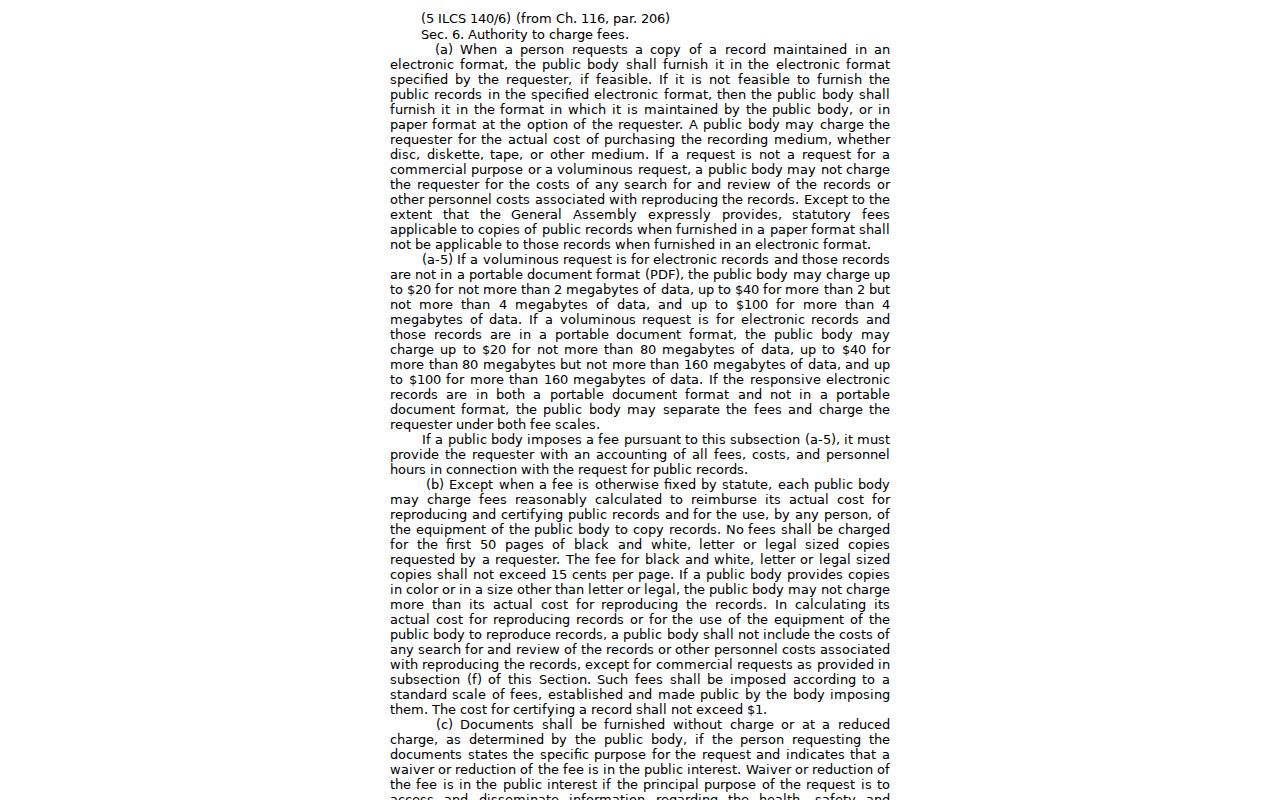
That provision is useful for city police requests, while the Circuit Clerk should still quote its own lawful court-copy charges.
A fee question is not a reason to make the request vague. Narrow dates and record types reduce search time and help the custodian give a useful response.
Public Access Rules in Mound City
Public access depends on the custodian and record. City police and county agencies answer Illinois FOIA requests, subject to exemptions and redaction. Court access follows judicial rules and sealing orders. ISP public dissemination under UCIA is conviction information, not every arrest or non-conviction event.
The Illinois General Assembly publishes the FOIA statute.
The text defines both the public right of access and lawful reasons an office may withhold or redact material.
The expungement and sealing provision describes relief for qualifying Illinois records.
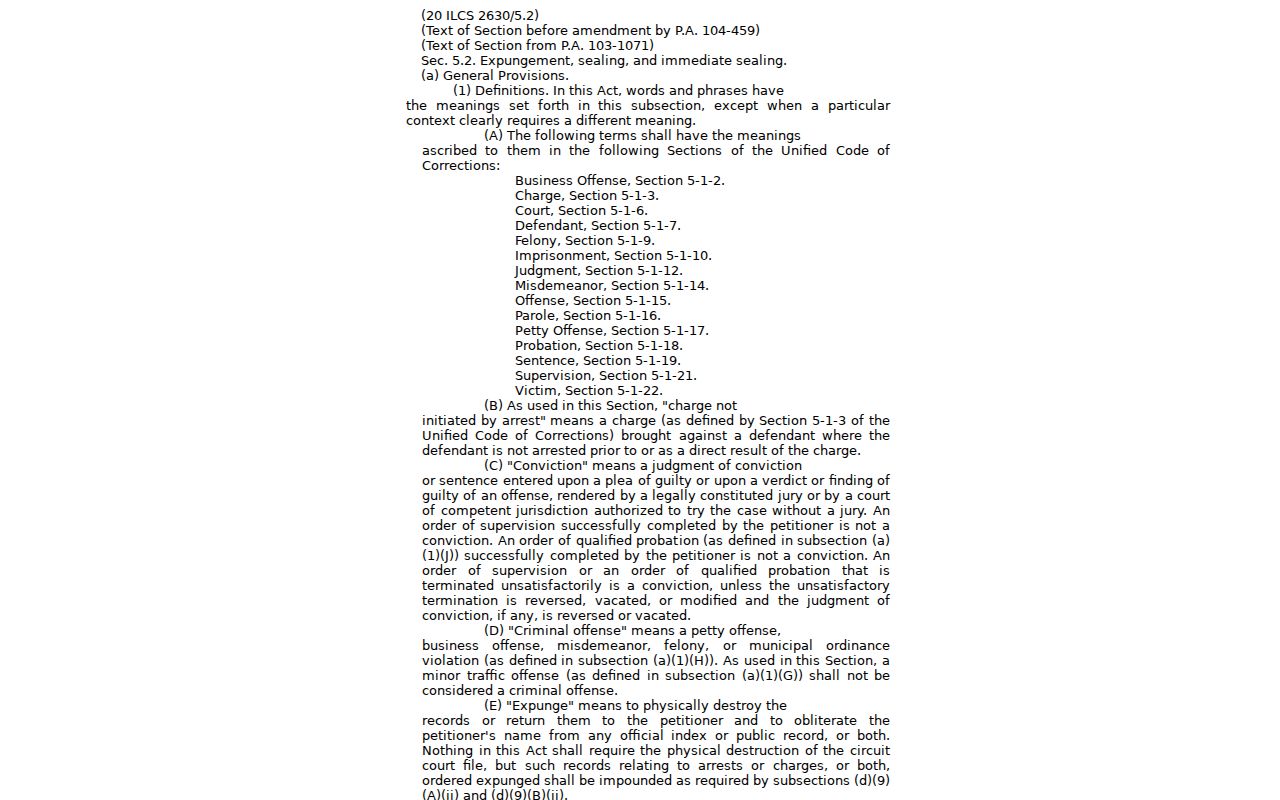
A signed order and completed agency processing, not a missing web result, establish the record's legal status.
Key Statutes:
Illinois FOIA, 5 ILCS 140 governs requests to city and county public bodies and permits defined exemptions.
Criminal Identification Act, 20 ILCS 2630 governs criminal-history handling, expungement, sealing, and automatic sealing.
Uniform Conviction Information Act, 20 ILCS 2635 authorizes public Illinois conviction-information requests.