
Sex Offender Checks in Pulaski County
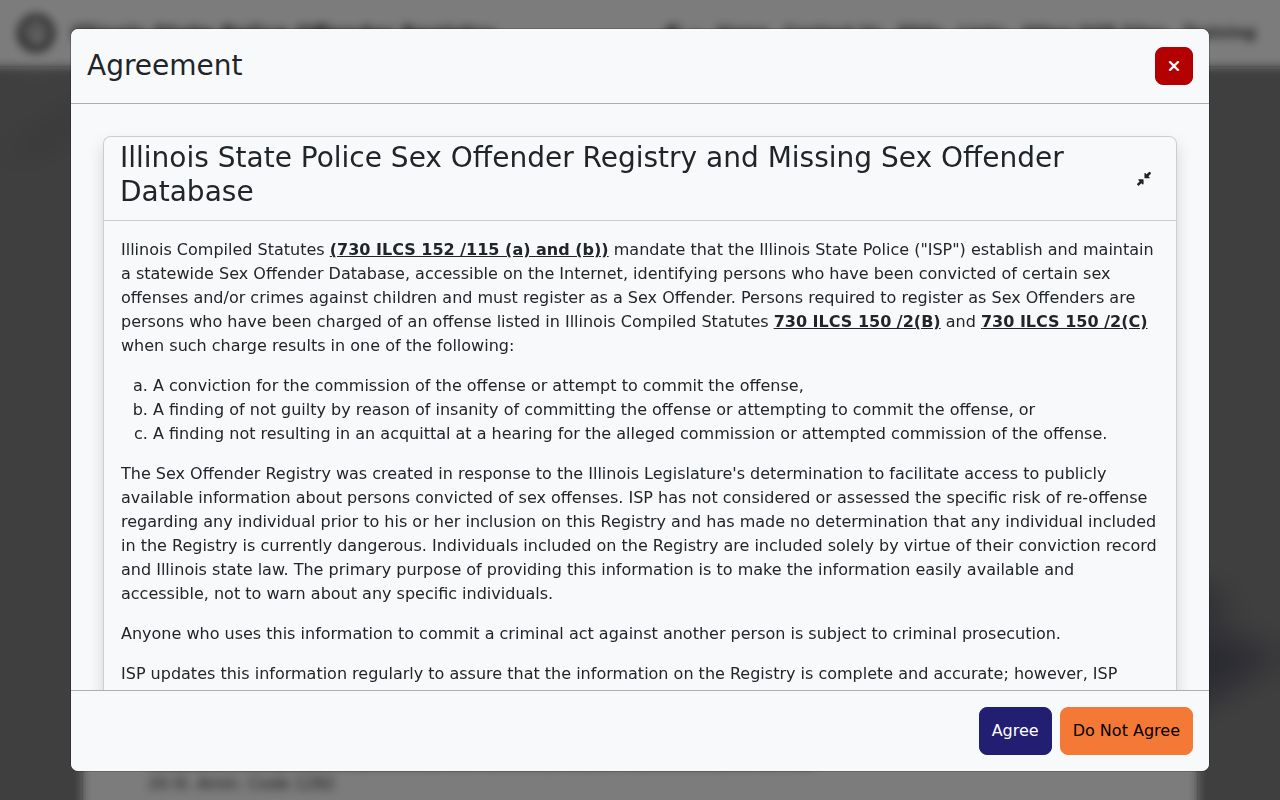
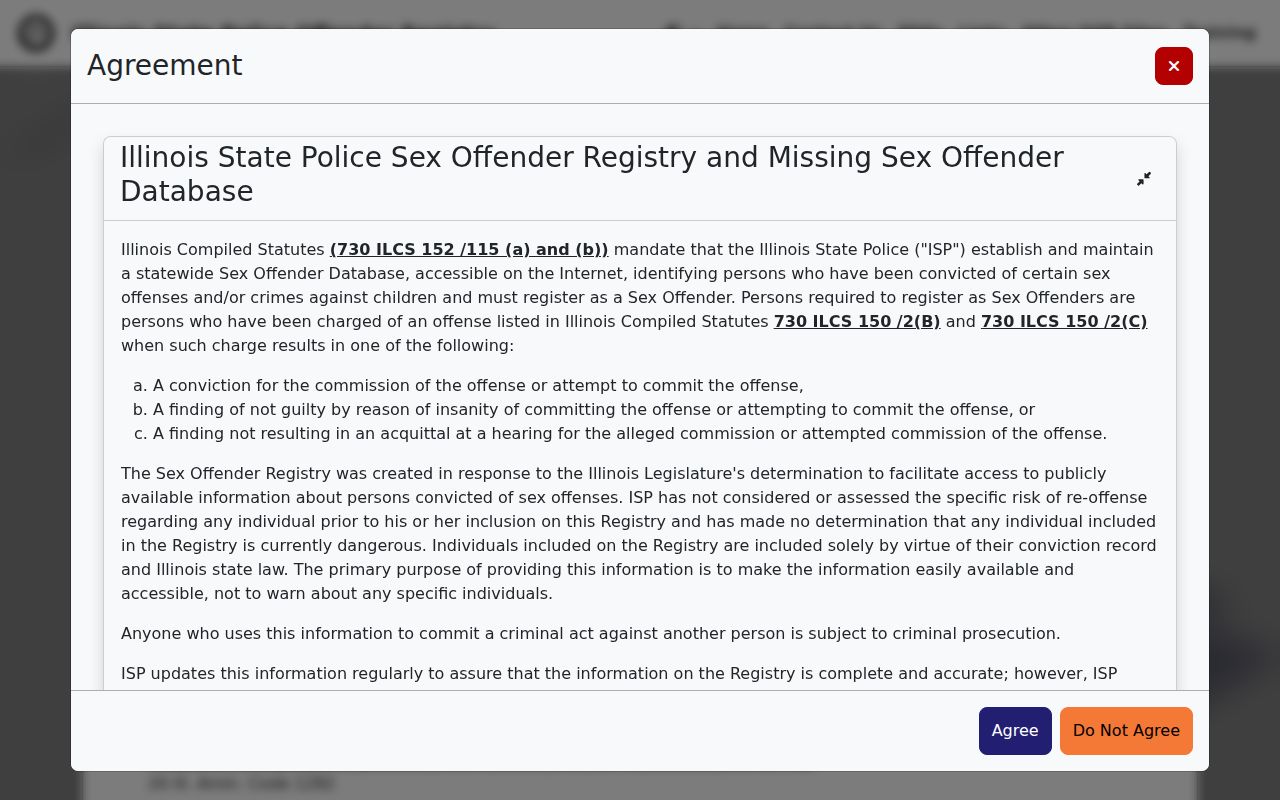
The Illinois State Police Sex Offender Registry disclaimer is the official starting point for a Pulaski County search. Read and accept its conditions before opening the database. ISP says the registry is updated daily, covers people registered for specified sex offenses or crimes against children, and may contain information supplied by registrants.
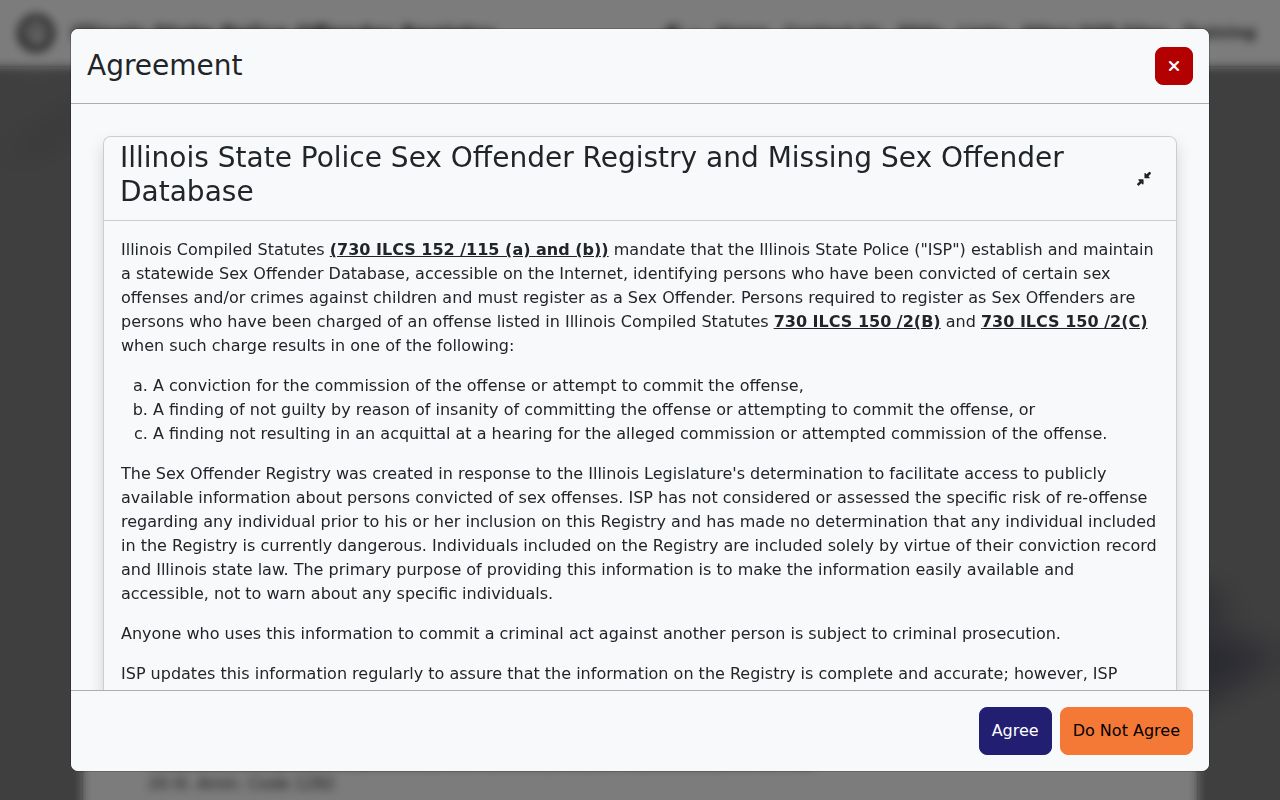
The disclaimer matters because a result is neither a complete criminal record nor a finding about conduct beyond the listed registration information. Searchers should compare the name, date of birth, photograph, address, offense details, and registering agency before concluding that a profile identifies the intended person.
Pulaski County does not publish a separate verified county registry database or a sheriff mobile app. The county route is therefore the ISP portal, followed by the agency named on the individual profile. A person registered at an address inside a municipality ordinarily reports to the police chief; someone outside a municipality ordinarily reports to the Pulaski County Sheriff.
Which Pulaski County Registry Agency Handles an Address?
Jurisdiction turns on the address, not simply the county name. Under Illinois law, registration in a municipality outside Chicago generally occurs with the municipal police chief. Registration outside municipal limits generally occurs with the county sheriff. That split means Mounds or Mound City residents should first confirm the responsible city police contact, while a rural Pulaski County address commonly routes to the Sheriff.
The Pulaski County Sheriff operates through the courthouse complex at 500 Illinois Avenue, Mound City, Illinois 62963. The county has not posted a dedicated sex-offender registration desk, direct registration telephone line, or appointment schedule. Call the county or Sheriff before arriving to confirm the correct desk, hours, documents, and whether the address is within city jurisdiction. The public profile’s registering-agency field is the best case-specific clue.
Pulaski County Sheriff
500 Illinois Avenue
Mound City, IL 62963
Registration contact for qualifying addresses outside a municipality. Confirm the desk and appointment process before visiting.
How to Search the Illinois State Police Sex Offender Registry
The ISP registry search interface provides both identity and geographic filters. A broad county search can show Pulaski entries, while a date of birth or status filter can help distinguish similar names.
The form allows fields to work together. Use only details you can verify, and clear an uncertain filter rather than excluding a relevant result by mistake.
- Open the ISP disclaimer, read the lawful-use terms, and select the button that enters the search.
- For a geographic check, choose Pulaski in the county dropdown. Add a city or ZIP code only when it is known.
- For a person search, enter a first or last name and use date of birth or another reliable qualifier to narrow matches.
- Open the profile, compare identifiers, and note the registering agency before seeking verification.
| Search field | Type | Required | Use |
|---|---|---|---|
| First and last name | Text | No | Start with either name and add qualifiers |
| Date of birth | Date/text | No | Narrows a known-person search |
| City or ZIP code | Text | No | Limits results geographically |
| County, incarcerated, or out of state | Dropdown | No | Select Pulaski for the county view |
| Status and offender type | Dropdown | No | Filters public statutory or compliance labels |
| Homeless | Checkbox | No | Finds profiles identified as homeless |
Reading the Pulaski County Registry Map
ISP’s “Map Your Neighborhood” tool accepts an address or map location and places yellow markers around it. Selecting a marker opens record details in a side panel. This view can help a family understand the area around a home, school route, park, or gathering place without requiring an exact name.
A marker is not a land survey, proof of a boundary violation, or a prediction of danger. Address data can change, and Illinois restrictions depend on the person’s statutory category and the particular protected location. Use the map for awareness, then open the profile and contact its registering agency if an address or compliance status appears wrong.
Do not treat an empty map as proof that no registrant is nearby. The registry describes known, publicly listed registration records. ISP warns that information can be incomplete and that the public should direct accuracy questions to the agency responsible for registration.
Inside a Pulaski County Registry Profile
The official ISP sample profile interface shows how Illinois organizes public identity, registration, and offense data. The layout also points readers to IDOC for parole or mandatory supervised release information and to the conviction county for underlying court documents.
Those referrals show the profile’s limits. It summarizes registry duties but does not replace a certified Pulaski County court file, a complete criminal-history response, or a current IDOC supervision record.
| Name and aliases | Published name and known aliases used to distinguish identity. |
|---|---|
| Birth and description | Full date of birth, height, weight, sex, race, and sometimes scars, marks, or tattoos. |
| Photographs | Current and historical images when supplied to ISP. |
| Address and agency | Registered address plus the police department, sheriff, or other registering body. |
| Registration record | Original and recent registration dates, stated duration, status, and statutory label. |
| Offense details | Crime descriptions, conviction county, age at offense, and a victim-age statement when published. |
Pulaski County Registry Labels Are Not Risk Tiers
Illinois profiles use statutory labels such as “sex offender” and “sexual predator,” along with registration status and duration. ISP does not provide a public federal SORNA Tier I, II, or III filter. Recasting an Illinois label as a federal risk score adds a meaning the state interface does not supply.
The distinction affects both reading and communication. A duration category tells the reader about a legal registration obligation. It does not predict whether a person will commit another offense, and the neighborhood map does not assign threat levels. Quote the ISP label as displayed, review the underlying offense information, and avoid inventing a tier.
When the underlying conviction matters, obtain the case from the circuit clerk in the county of conviction. For a Pulaski County conviction, the Circuit Clerk at 500 Illinois Avenue can explain access to the docket, orders, or certified disposition. The clerk’s published counter hours are weekdays from 8:00 a.m. to noon and 1:00 to 4:00 p.m.
Illinois Registration Levels and Requirements
Illinois sets registration duties by statute rather than a simple three-tier public score. Under 730 ILCS 150/3, a person generally registers in person within three days of a triggering event involving residence, presence, school, work, sentencing, or release. Positive identification and proof of residence are required.
| Illinois category or event | General duration | Verification framework |
|---|---|---|
| Sex offender, non-predator category | Commonly 10 years from the qualifying start, subject to tolling and offense-specific rules | Many report annually; confirm the current statute and profile |
| Sexual predator and other lifetime categories | Lifetime registration | Sexual predators and specified categories report every 90 days |
| Noncompliance | A 10-year extension can begin with the first registration after a violation under 730 ILCS 150/7 | Agency and profile status should be verified |
The statute lists a $100 initial registration fee and a $100 annual renewal fee, with indigence-waiver and local-allocation provisions. These amounts concern the registrant’s statutory process, not the public’s free registry search. Exact duration and reporting frequency can depend on the offense, date, category, custody time, and later violations.
Pulaski County Cross-State Registry Searches
Pulaski County sits near state borders and major rivers, so a location-based inquiry may cross beyond Illinois. The National Sex Offender Public Website provides a federal search layer across participating jurisdictions. It is useful when an address, workplace, family route, or known person may connect to more than one state.
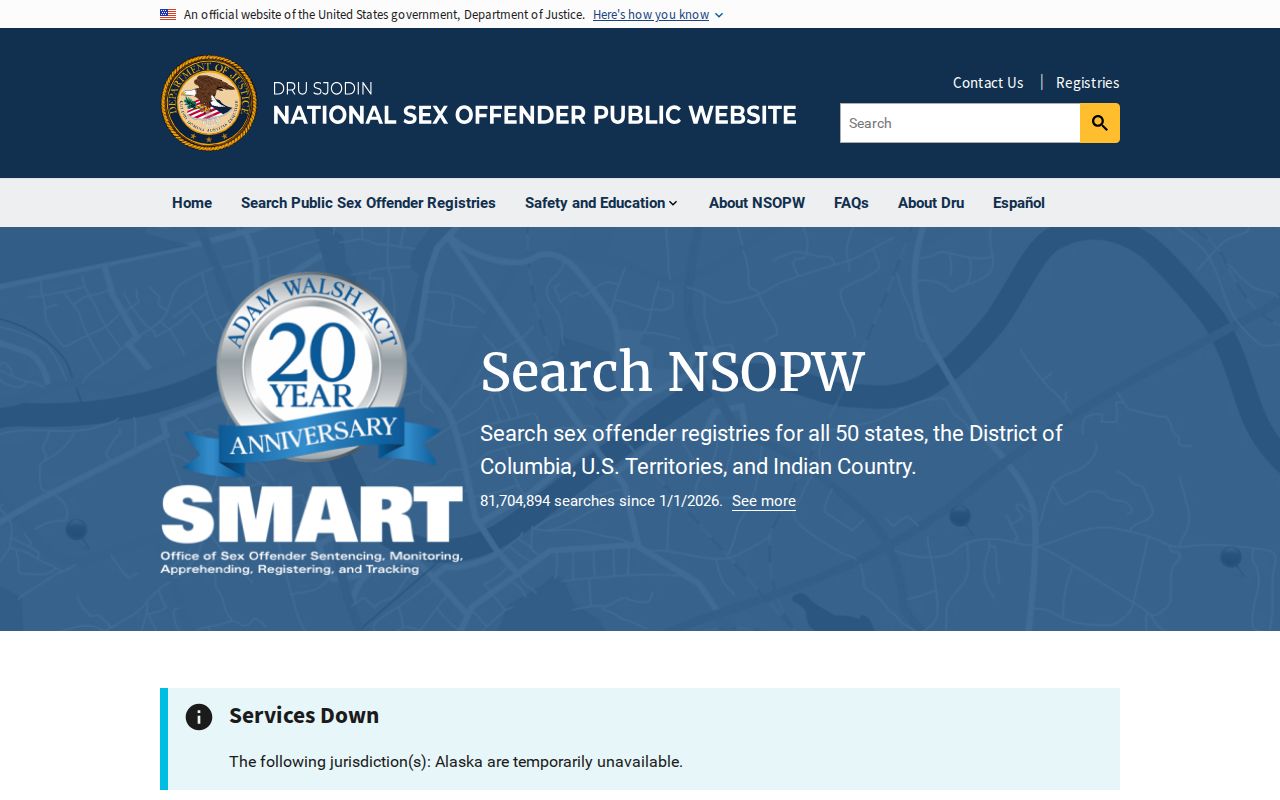
NSOPW routes searchers to participating jurisdiction data. For an Illinois match, open the ISP record and rely on its listed registering agency for a current address or compliance question.
The national search does not turn separate state definitions into one common risk system. Search name variants and relevant places, then read the Illinois label in Illinois terms. If the inquiry concerns an underlying Pulaski County conviction rather than registration status, use the court case file instead.
Pulaski County’s Three-Day Registration Rule
The three-day rule covers several triggers, not just moving into a new home. Illinois law identifies residence, presence, school, work, sentencing, and release events. The responsible agency needs in-person registration and proof, which is why a public user should report a suspected discrepancy instead of trying to resolve it through confrontation.
The Illinois Sex Offender Registration Act supplies the governing registration, duration, and enforcement framework.
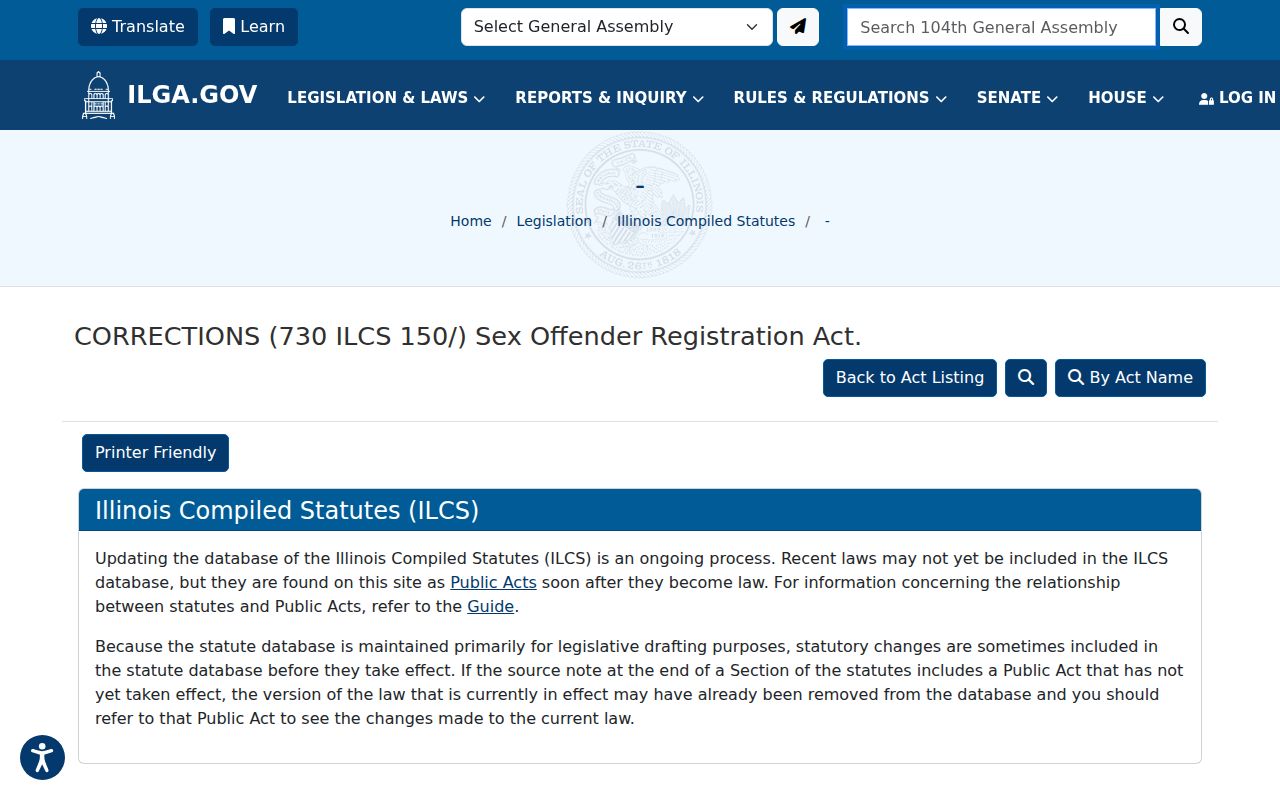
The statute also explains why one Pulaski County office cannot answer every question. Municipal police and the Sheriff divide registration duties by location, while ISP publishes the statewide search. IDOC handles custody and supervised-release information, and the circuit court holds the conviction case.
Community Notification and Lawful Use
The registry exists for lawful safety awareness. A resident may use it to understand published records near a route or address, prepare a family safety plan, or verify whether a known profile is listed. When information appears inaccurate, contact the profile’s registering agency or ISP. Report suspected noncompliance to officials, not through a public accusation.
Misuse is prohibited: ISP warns that registry information may not be used to harass or threaten a registrant or family, and Illinois law provides criminal penalties for unlawful misuse.
Residence restrictions for covered child sex offenders can apply near specified schools, playgrounds, and child-care facilities. A map marker alone does not decide whether a statutory restriction applies. That question requires the correct legal category, accurate measurements, current facts, and review by the responsible agency or qualified counsel.
Registry information is also narrower than a Pulaski County criminal-history review. It does not list every case, and the absence of a profile does not prove the absence of a criminal record. Use the registry for its stated public-safety purpose, confirm identity carefully, and verify any material fact with its originating office.